I said yes because it was my nephew’s seventh birthday—and because I’ve always been the aunt who shows up. I never imagined that my beloved home—my sanctuary, the result of years of hard work and careful saving
—would become the backdrop for a celebration I wouldn’t even attend. I handed my sister the keys with one simple request: “Please be careful. I just finished everything.” She smiled and promised that I wouldn’t even know anyone had been there.
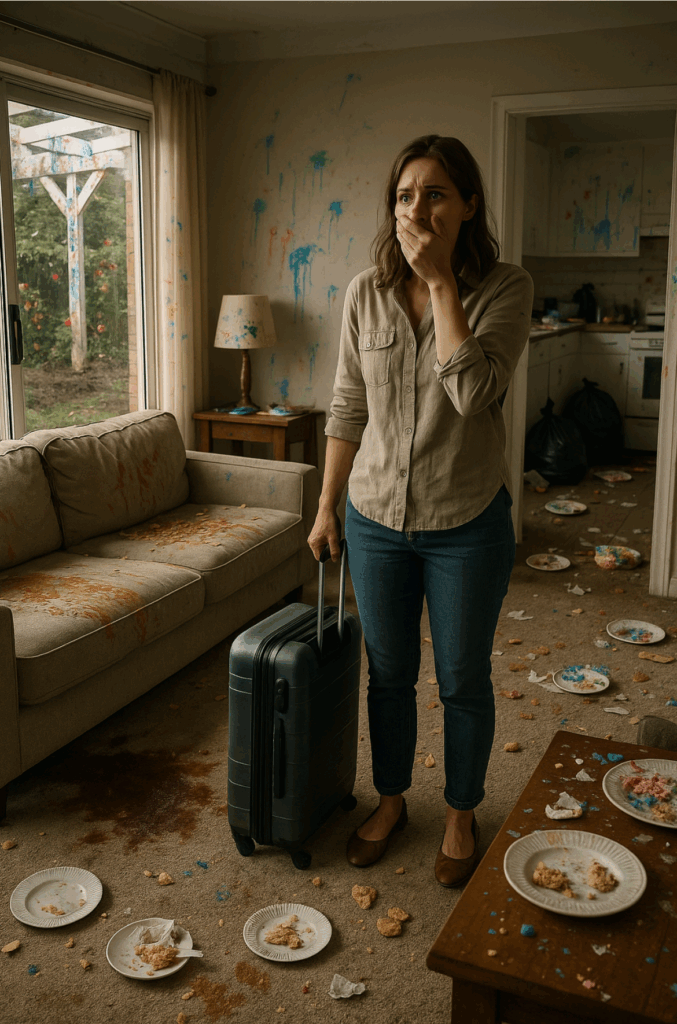
Two days later, I pulled into my driveway, and even before stepping inside, I knew something was wrong. A limp balloon drooped from the fence like a wounded flag. The front door hung slightly open, as if inviting chaos in.
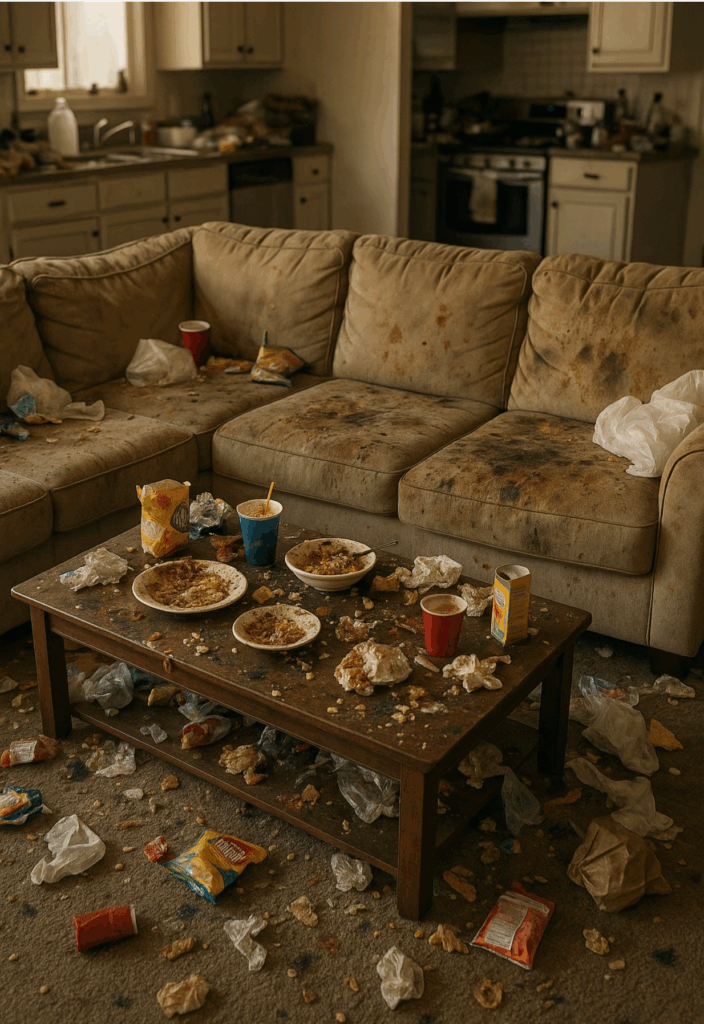
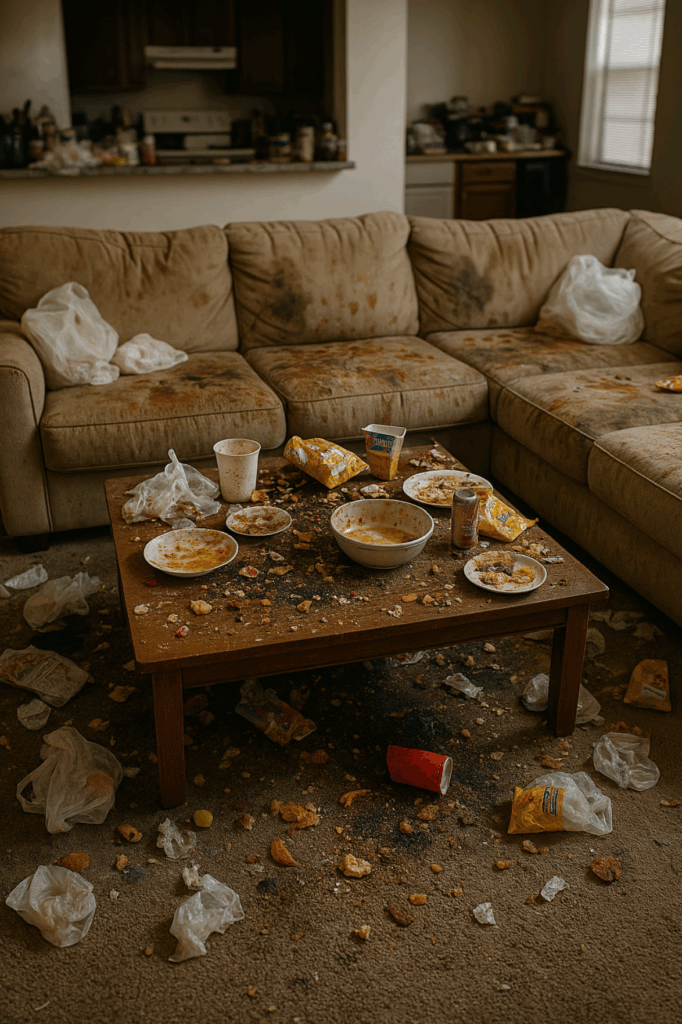
The moment I entered, the assault on my senses hit: the sharp, greasy tang of fried food, the sweet, cloying scent of sugar, and something sour that clung stubbornly to the walls. My perfect beige rug was a battlefield,
splashed with purples and reds like the aftermath of a sugary massacre. The cream-colored couch bore sticky frosting fingerprints and melted wax like battle scars. Plastic cups, sticky rings of soda, and bits of cake littered the coffee table.
My pale green flea-market vase lay in shards on the floor. Water had warped the floorboards, curling them in uneven waves. In the kitchen, towers of paper plates leaned dangerously, crusted pizza slices decorated the counters, and a cake—once proud—was now a slanted, smeared mess across the fridge shelf.
I told myself the backyard would be okay. It wasn’t. The lawn I had tenderly coaxed into lush perfection was flattened, torn to mud. Candy wrappers drifted through the lavender like confetti. My roses—hand-dug, nourished, pruned with devotion
—were ripped from their roots and tossed aside like weeds. I stood there, handbag still slung over my shoulder, and felt a quiet, cold weight settle in my chest. Something inside me went utterly still.
I called my sister. She laughed, a sharp, careless sound that sliced through the despair. “Don’t be dramatic. It’s just a kid’s party. You wouldn’t understand.” When I explained the devastation—the ruined garden, the indelible stains—her tone turned cutting.
“Maybe you shouldn’t have such high expectations for a house that’s meant to be lived in. You live alone in a big, fancy place. Jason deserved a real party. You don’t even need it.”
I asked if she had done it on purpose. She didn’t deny it. “You have no idea how hard it is in a tiny house. Maybe now you’ll understand.”
I hung up before I said something I could never take back. Then, after the initial shock, I did what I always do: I got to work. I hired a cleaning crew. The technician knelt by my rug, shaking his head slowly.“We can’t save this.”
Three thousand dollars vanished into repairs and replacements. Landscapers hauled away the dead roses, replaced the soil, and planted anew. I resealed the pergola. I bought new chairs. I kept every receipt, a ledger of betrayal that I would never forget.
My sister never apologized. She never offered a cent. Two weeks later, she sent a text: “Hope you’re not still mad! Best birthday ever! You should be happy you helped.” I stared at my phone, my throat tight, realizing that this wasn’t a misunderstanding. It was envy, wearing a party hat.
Then, as if the universe itself had a sense of irony, a pipe burst in her kitchen. The first floor flooded. Walls ruined. Mold creeping in corners. The estimate? Just over three thousand dollars—almost exactly what I had spent to restore my home.
She called, furious, convinced it was my revenge. Of course, it wasn’t. I wouldn’t wish that on anyone—not even her. But I didn’t smile at the coincidence. Justice without love feels hollow. It’s quiet, not victorious.
We didn’t speak again. The canyon between us widened. But my nephew still visited when he could. We baked cupcakes together, watered the new roses, and he ran barefoot across the yard, just as little boys should.
One afternoon, he pressed his small palm to the soil and looked at me seriously. “These are even prettier than the old ones.” I swallowed the lump in my throat and ruffled his hair. “They’re strong. Just like us.”
Here’s what I never told him: I built this house molecule by molecule. Nights with paint in my hair, weekends crawling on bruised knees to sand baseboards. A backyard planted by hand—roses, lavender, and clematis climbing a white pergola like a promise.
Warm bulbs chosen after hours in the lighting aisle. The right sofa chosen carefully, not quickly. I didn’t buy a house. I made a home.
And that’s why their silence after the party cut deeper than the mess. Stains could be scrubbed or replaced; the quiet told me my boundaries didn’t matter. That is the cost no one warns you about—lending out the softest, most sacred parts of your life, only to have them returned carelessly, loudly.
I rebuilt anyway. Not for them. For me. The new rug is softer. The couch is stain-resistant (let the marketers have that victory). The garden is different, but it breathes again. Some mornings, I sit under the pergola with coffee and a croissant, listening to the roses sway.
Different roots now—but still mine.Last weekend, I hosted friends. Candles flickered outside, music played softly, and the bottle I’d been saving finally opened. Laughter spilled into the night like sunlight through rain. It felt like the first bloom after a storm:
fragile, perfect. I raised my glass, whispering a promise to myself: never again will I hand over my keys to someone who treats my life like a venue. My home carries my sweat, my money, my love, my peace. I will protect it.