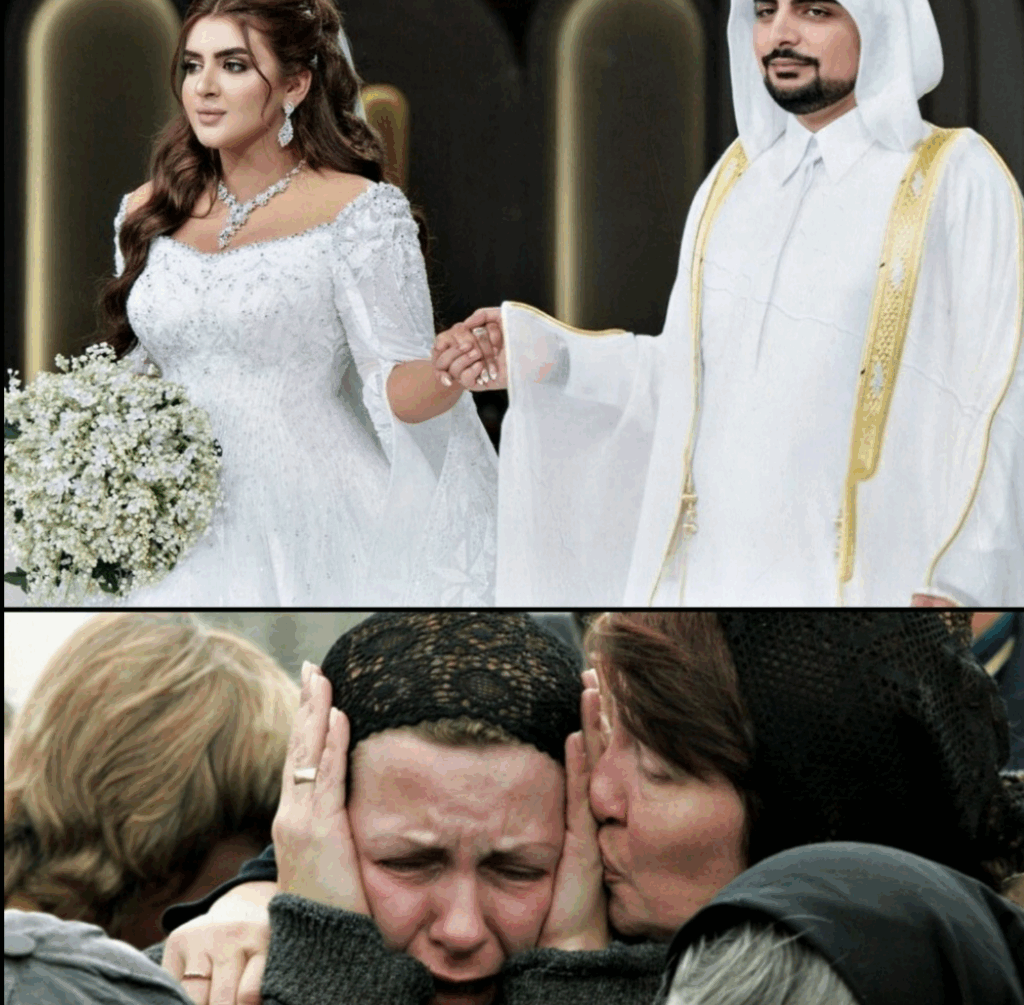
Teresa’s Last Dance: A Tragedy That Changed the World. The news of Teresa’s death struck like a bolt of lightning from a clear sky.
Just the night before, she had danced beneath a canopy of lights, laughter on her lips and love in her eyes. Eduardo, her new husband, had watched her with a gaze so full of devotion it seemed to stop time itself.
Now, he was a hollow shell—alone in a dim hotel room corner while doctors and officials surrounded the lifeless body of his bride.
Back in Spain, her parents, Maria and Victor, received the call that would shatter their world. Their daughter—so full of life, dreams, and radiant joy—was gone. With trembling hands and shattered hearts, they boarded the next flight to Dubai.
At the forensic center, they were asked to identify Teresa’s body. She looked peaceful, almost like she was simply asleep. But the icy stillness of her skin left no room for hope.
“What happened?” Maria’s voice broke as she turned to Eduardo, her eyes begging for answers. “How can someone just… die overnight?”
Eduardo, his eyes swollen from crying, could only shake his head. “We fell asleep happy. She never woke up.”
Then the coroner spoke—a man with silver hair and a steady voice that carried no comfort. “We performed a preliminary autopsy. Teresa died of an acute allergic reaction—anaphylaxis.”
“An allergy? To what?” Victor asked, stunned. “She didn’t have any allergies.” The coroner glanced at his notes. “We found traces of a compound called para-phenylenediamine—commonly found in…”
“Henna,” Eduardo whispered, going pale. “It was in the henna she wore during the ceremony last night.”
Maria gasped. Victor stared in disbelief. Could something so innocent, so beautiful, be deadly?
As the days passed, pieces of the truth emerged like a dark, tragic puzzle. The henna used on Teresa wasn’t the traditional, plant-based kind. It was synthetic—black henna—laced with dangerous levels of para-phenylenediamine, or PPD.
A chemical often used in hair dyes, PPD can cause violent allergic reactions when it touches the skin. “But why? How could this happen?” Maria kept asking, unable to grasp the banality of what had stolen their daughter from them.
The answer came from Fatima, Eduardo’s sister and the organizer of the wedding rituals.
“I just wanted everything to be perfect,” she said, her voice barely above a whisper. “Natural henna is reddish-brown and takes hours to set. Black henna gives a bold, striking look and dries fast. It’s what many brides here use.”
“You knew it could be dangerous?” Victor asked, trying to contain his rage. Fatima shook her head. “No… it’s so common here. Nobody ever warned us. Everyone uses it.”
Authorities confirmed there was no criminal negligence—just a tragic ignorance. PPD-laced henna is widespread in many regions, and while allergic reactions are rare, they can be fatal. Teresa was one of the unlucky few.
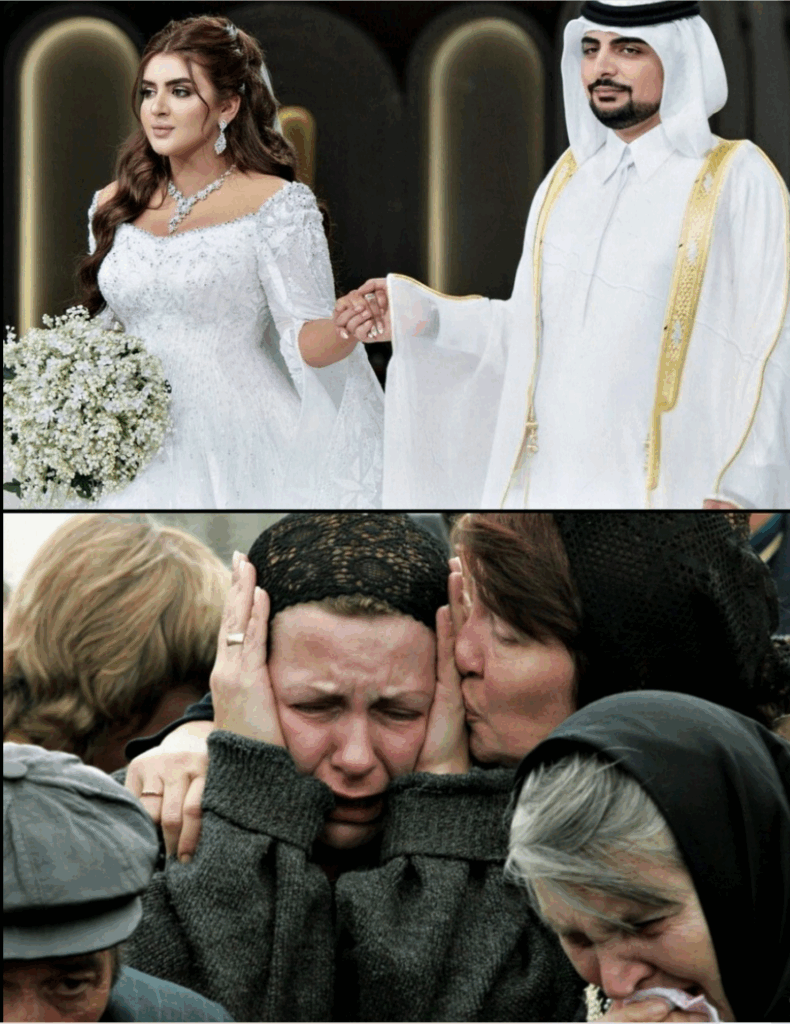
For her parents, that made the loss all the more unbearable. Their daughter had been taken not by fate or illness—but by a toxic twist in an ancient beauty ritual.
“If we had only known,” Maria kept repeating, as she held a photo of Teresa smiling, her hands adorned in elegant black henna designs that now looked like sinister marks of fate. “If we had only known…”
Eduardo arranged the funeral according to Teresa’s wishes—wishes she had mentioned months earlier during a conversation about cultural traditions. She had wanted to be cremated and have her ashes scattered into the sea.
“So I can keep traveling,” she had said with a laugh, “even after I’m gone.” After the ceremony, Eduardo handed Maria and Victor a sealed letter. “She wrote it a few days before the wedding,” he explained. “She told me to give it to you… in case.”
In the quiet of their hotel room, Maria and Victor opened the envelope. “My beloved parents,” the letter began, “if you’re reading this, I’m no longer with you. I don’t know what happened or how, but I need you to know this:
I’ve been happier this past year than I ever dreamed possible. Eduardo showed me a world I never knew existed. He loved me in a way I didn’t even know I deserved to be loved.
Please don’t drown in grief. I lived with joy. I loved deeply—and I was deeply loved. What more can we ask from life?
And please—don’t blame anyone. Life is unpredictable. Sometimes, the brightest flowers are the first to fade. As Grandma always said: ‘God picks the most beautiful blossoms for His garden first.’ I love you endlessly. And wherever I am, you’ll be in my heart.
– Teresa.” Tears flowed freely as Maria read those words—but for the first time since Teresa’s death, they were not just tears of grief, but also of peace.
The story of Teresa’s tragic death soon made headlines across the globe. Health agencies began issuing warnings about the dangers of synthetic black henna.
Her parents and Eduardo launched a foundation to raise awareness about harmful cosmetic chemicals and promote safer, natural alternatives.
“We can’t bring her back,” Maria told reporters, “but we can make sure her story saves others.”
And it did. The foundation sparked global awareness campaigns. Several countries passed laws requiring clearer labeling of PPD in cosmetics. The world had changed—because of one young woman, and one devastating mistake.
A year later, on the anniversary of her death, Eduardo and Teresa’s parents stood together at the beach where her ashes had been scattered. They brought flowers, shared stories, and spoke of the girl who had touched so many lives.
“I remember when she was little,” Victor said, gazing at the waves. “She had pneumonia so badly the doctor told us to prepare for the worst. But she fought through it. I thought nothing could ever defeat her. Life is so fragile.”
“And yet, so powerful,” Eduardo added. “Look how many lives her story saved. Families she never met, people she’ll never know—because of her, they were spared.”
Maria smiled through her tears, holding a photo from Teresa’s wedding day—her daughter glowing with happiness. “That’s who Teresa was,” she whispered. “A light for others. Even now.”
As the sun set in a blaze of red and gold, they stood in silence, letting the ocean wind carry their memories. It was a moment of mourning, but also of grace—a reminder that love endures beyond death, and that sometimes, the greatest losses lead to the most powerful legacies.
That same evening, somewhere in the world, a young bride declined to use black henna. She didn’t know Teresa, had never heard her name—but the changes sparked by Teresa’s story had reached her. She chose the natural kind. And without knowing it, Teresa saved another life.